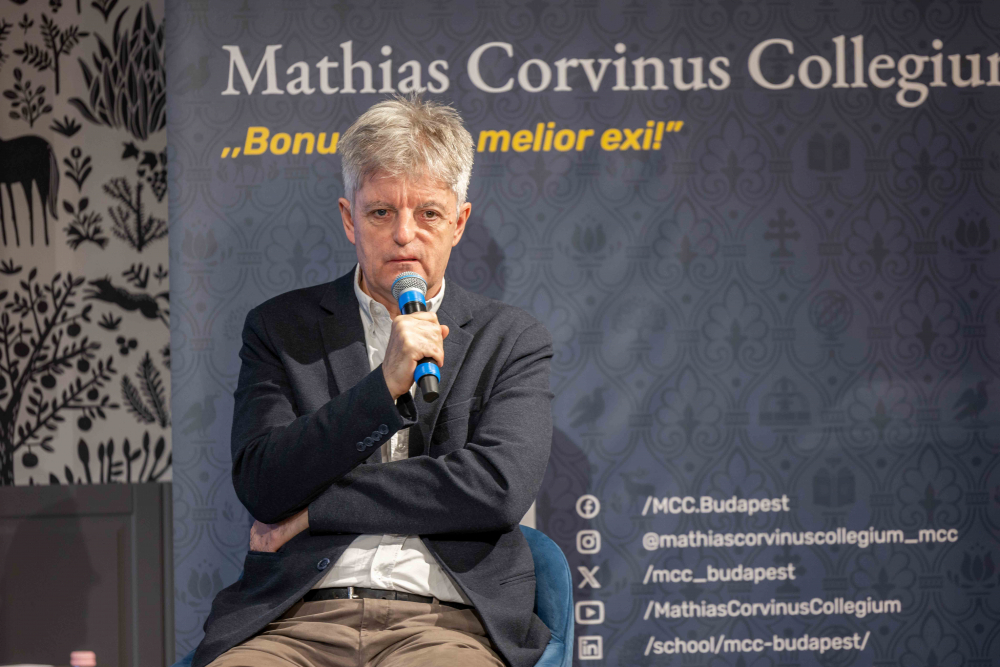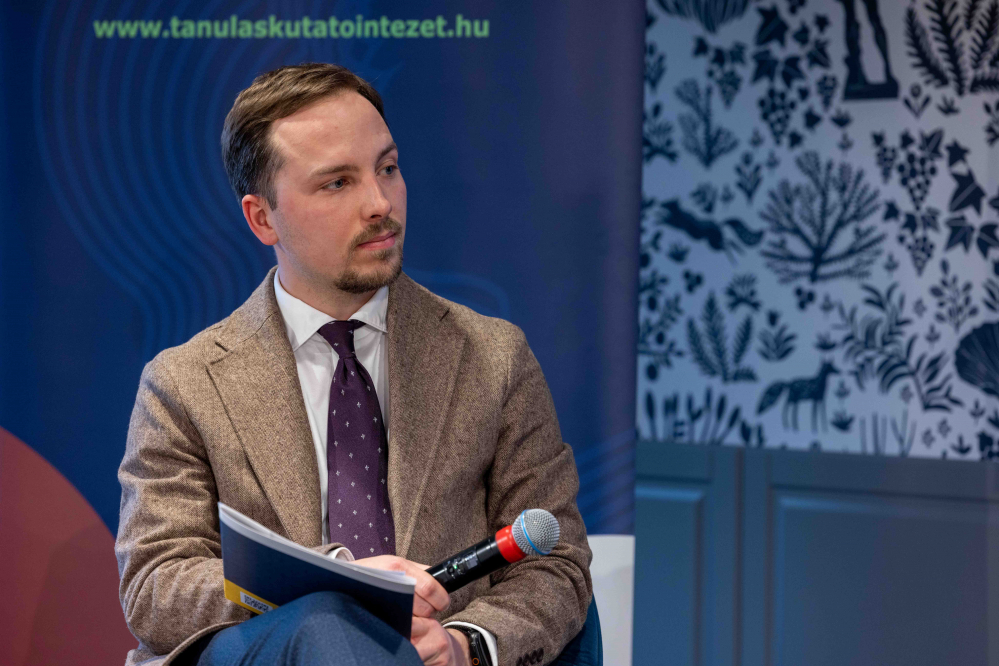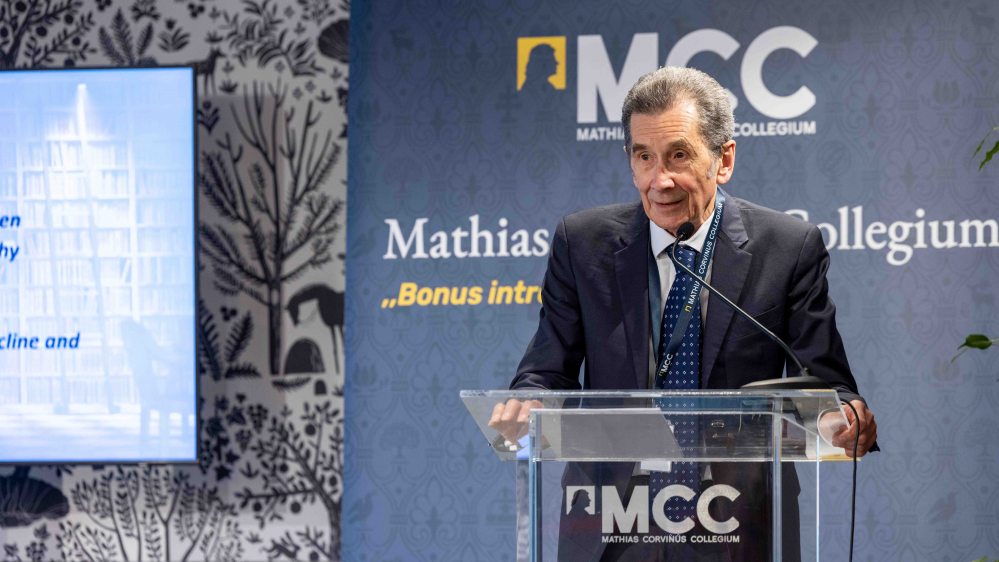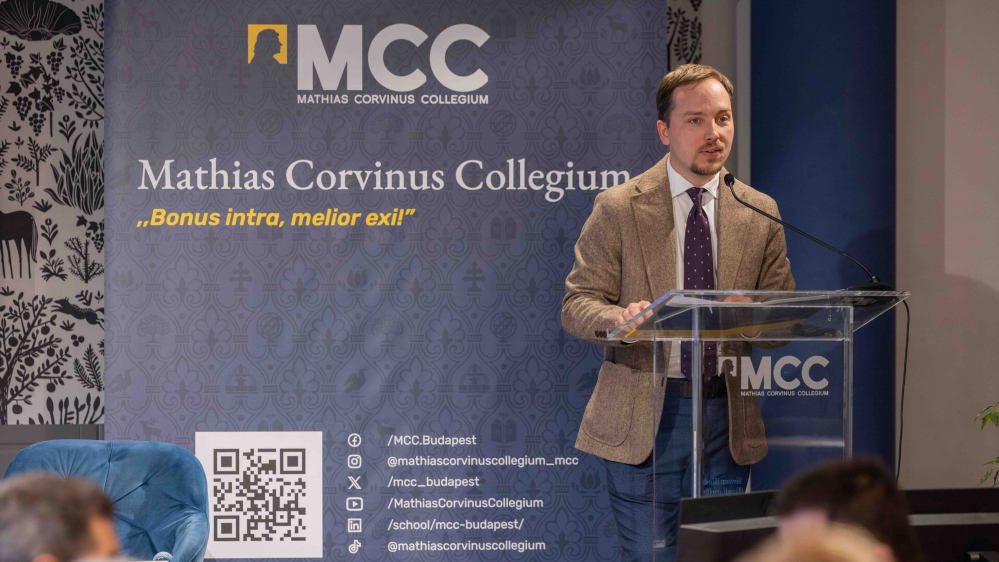

Which books once shaped the intellectual world of Europe – and why have they almost completely disappeared from our reading lists today? This question was at the heart of a book launch event held in Budapest at Mathias Corvinus Collegium, where Nicholas Tate presented his volume Seven Books That Everyone Once Read and No One Now Does. The event offered not only an introduction to the book, but also a broader reflection on reading, classical education, and the place of great books in European cultural life.
The volume explores the history of seven works that played a defining role in European civilisation for centuries. Spanning from antiquity to the early nineteenth century, the selection ranges from De Officiis to Waverley. The books discussed – including Parallel Lives, The Consolation of Philosophy, The Pilgrim’s Progress, The History of the Decline and Fall of the Roman Empire, and Le Morte d’Arthur – once formed a shared intellectual foundation for the educated classes across Europe. The book examines how these works became widely read, how they were interpreted in different historical periods, and why they gradually disappeared from everyday reading.
During the discussion, Nicholas Tate emphasised that these works are not merely literary achievements, but texts that engage with fundamental questions of human existence. For generations, they helped readers reflect on how to live well and how to face life’s challenges. Their enduring appeal lay partly in the fact that earlier European societies were more conscious of their historical roots and placed greater value on the study of the past.
The conversation also addressed how the role of reading has evolved over time – from papyrus and manuscripts to printed books and, more recently, digital formats. The invention of printing in the fifteenth century, followed by the so-called “reading revolution” of the eighteenth century, made books accessible to increasingly wider audiences. Today, however, this trend appears to be reversing: the rise of visual media and digital platforms is contributing to the decline of deep, sustained reading.
A key theme of the event was whether the diminishing presence of classical literature reflects a broader cultural decline or rather the expansion of education to a wider population. Setényi János highlighted that classical works do more than transmit knowledge; they convey fundamental values such as duty, service, and perseverance—values that are often less visible in contemporary education systems. The discussion was moderated by Fodor Richárd, who guided the conversation towards the educational and historical implications of these shifts.
Particular emphasis was placed on the importance of “deep reading.” In earlier periods, readers engaged actively with texts: they annotated, excerpted, and reflected on how what they read applied to their own lives. This reflective mode of reading—famously described by Marcel Proust as reading while “raising one’s head” to think—has become increasingly rare in the modern, fast-paced media environment.
At the same time, the discussion offered practical guidance for approaching these works today. Engaging with classical texts does not necessarily require extensive prior knowledge; rather, it calls for openness, patience, and a willingness to immerse oneself in longer narratives. Beginning with more accessible works and allowing the reading experience to unfold naturally can help reintroduce readers to this tradition.
The event concluded with an opportunity for the audience to ask questions, as well as to purchase and have copies of the book signed. Held in English without interpretation, the discussion attracted considerable interest and demonstrated that questions surrounding classical literature and the future of reading continue to resonate strongly with contemporary audiences.
The central message of the book launch was clear: although these works are no longer widely read, their relevance has not diminished. On the contrary, in an increasingly fast-paced and visually oriented culture, there may be an even greater need for texts that encourage reflection, concentration, and a deeper understanding of the human condition.