
How can genuine cooperation between higher education and the business sector be achieved? What challenges arise from the different operational cultures of academia and industry, and what best practices can be observed in China, Europe—and particularly Hungary? What does it take to ensure that academic knowledge does not remain isolated but actively shapes the economy?
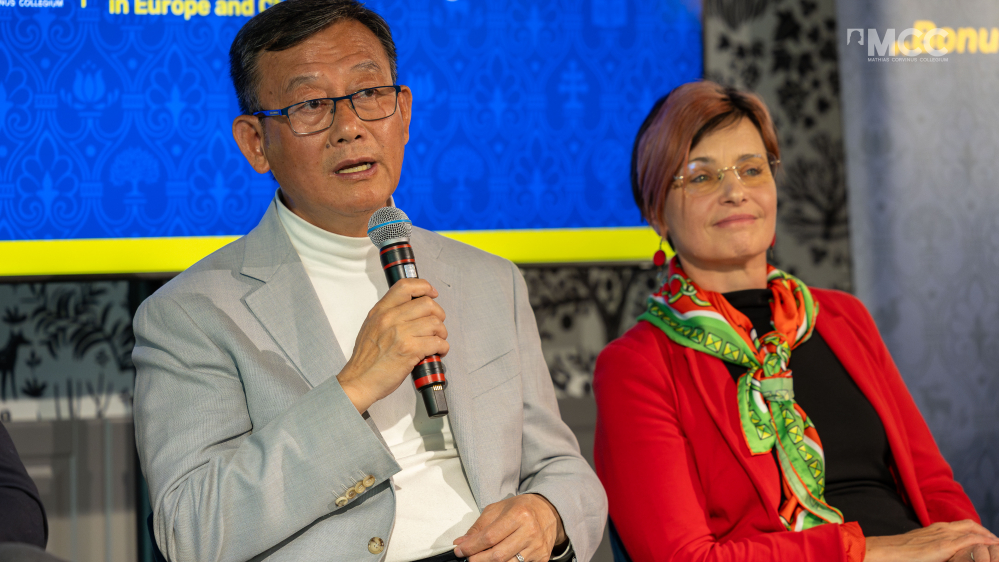
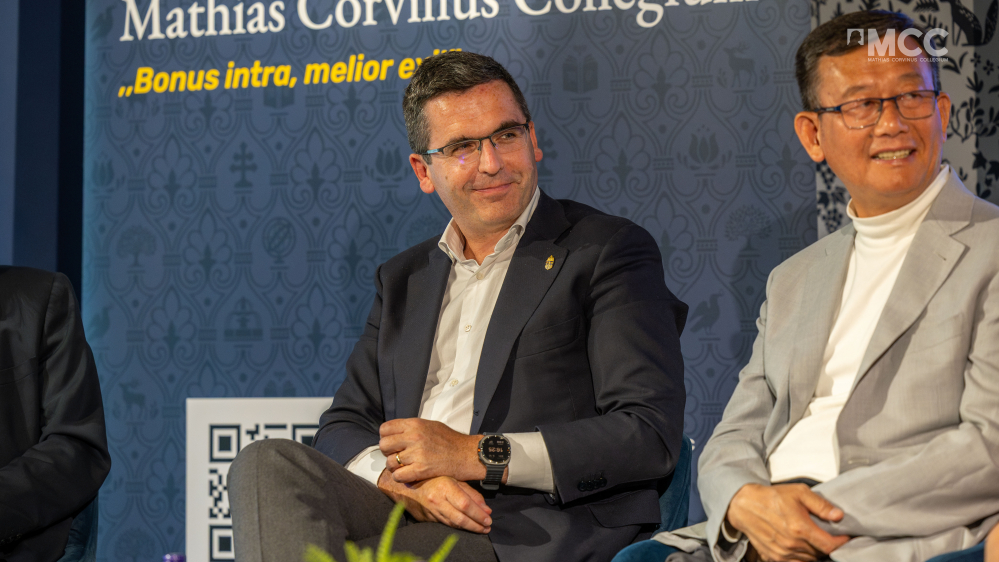
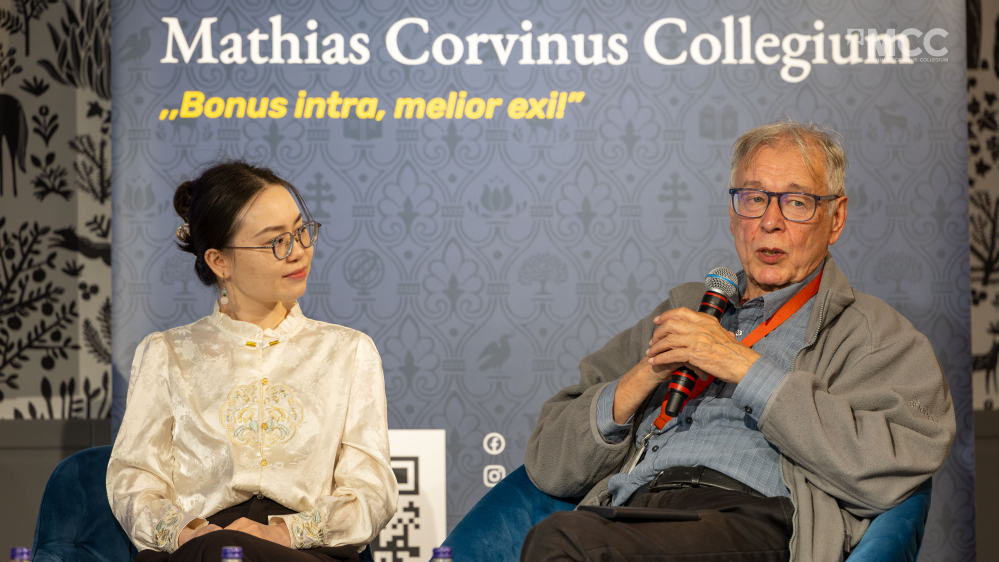
In the MCC in Budapest hosted the Education–Industry Integration in Europe and China roundtable discussion, organized by the Learning Institute. University leaders, researchers, and representatives from both industry and academia came together to explore the opportunities and obstacles of education–industry cooperation, and to present successful examples that could inspire institutions across borders.
Levente Kovács, Rector of Óbuda University, emphasized that a university educating engineers bears not only the responsibility of knowledge transfer, but also of engaging its students in solving real-world industrial problems during their studies. Innovation, he stated, is not an isolated activity but a network in which universities, the economy, and society must all be active participants.
"Our challenge is to prepare students not only to understand innovation but to manage it—because even the best ideas need teams and strategies to thrive."
Frank Gang, Dean at CR Shelton–Liverpool University in China, highlighted the importance of proactive engagement: “We shouldn't wait for companies to knock on our doors—we should approach them and ask what they need.” He explained that in China, industry collaboration is deeply embedded in the national innovation strategy, providing strong momentum for a practice-oriented transformation of higher education.
“From our side, we talk directly to companies, understand their talent needs, and then redesign our programs accordingly.”
Junkai Ma, president of a Chinese-owned Hungarian higher education institution, pointed to cultural differences and trust as key issues. Based on his experience, many partnerships fail to take root despite initial enthusiasm. He stressed the need for intermediary platforms to support long-term collaboration and communication between stakeholders.
“Trust is the foundation. Without it, agreements remain symbolic and cooperation stalls.”
Dr. Gábor Halász, senior researcher at the MCC Learning Institute, underlined that the traditional European university model often still values distance from the business world as a guarantee of academic autonomy. "Knowledge transfer today is not a one-way process—universities can learn just as much from industry as the other way around," he stated.
“We must overcome the mindset that universities only ‘produce’ knowledge—when in fact, some of the most advanced knowledge practices are now found in industry.”
János Setényi, Director of the Learning Institute and moderator of the roundtable, illustrated the tensions between academic and practical domains through a personal story. In the 1990s, working in a state research institute, he began offering consultancy to municipalities—only to be told this was outside the institution's academic mission. Eventually, he left and founded his own advisory company.
"Researchers weren’t interested in practical problems, and municipalities didn’t care for research—someone had to translate theory into practical language."
Renáta Vanó, representing the Hungarian Educational Authority, provided insight from the regulatory perspective. She explained that it is often difficult to ensure suitable industry partners, especially in smaller academic programs, though many positive examples exist in engineering, IT, medicine, and the arts.
"Ultimately, the most important stakeholder is the student—our job is to equip them with both knowledge and confidence to succeed in the real world."
Participants shared personal experiences about how they first engaged with industry partnerships. Some worked on real-world projects during university studies, while others established long-term collaborations through research initiatives. The most successful models, they agreed, are those where industry is involved not just in implementation, but also in shaping curricula and educational objectives.
In closing, several participants emphasized that education–industry collaboration should not be a side project, but the result of systemic thinking. One emerging concept was that of the "education–industry ecosystem": a dynamic space in which knowledge, innovation, experience, and workforce can move freely between universities and companies—across borders and sectors.
The roundtable’s main takeaway was clear: collaboration is not just desirable—it is inevitable. The only question is who will begin building the real bridges, and when.